

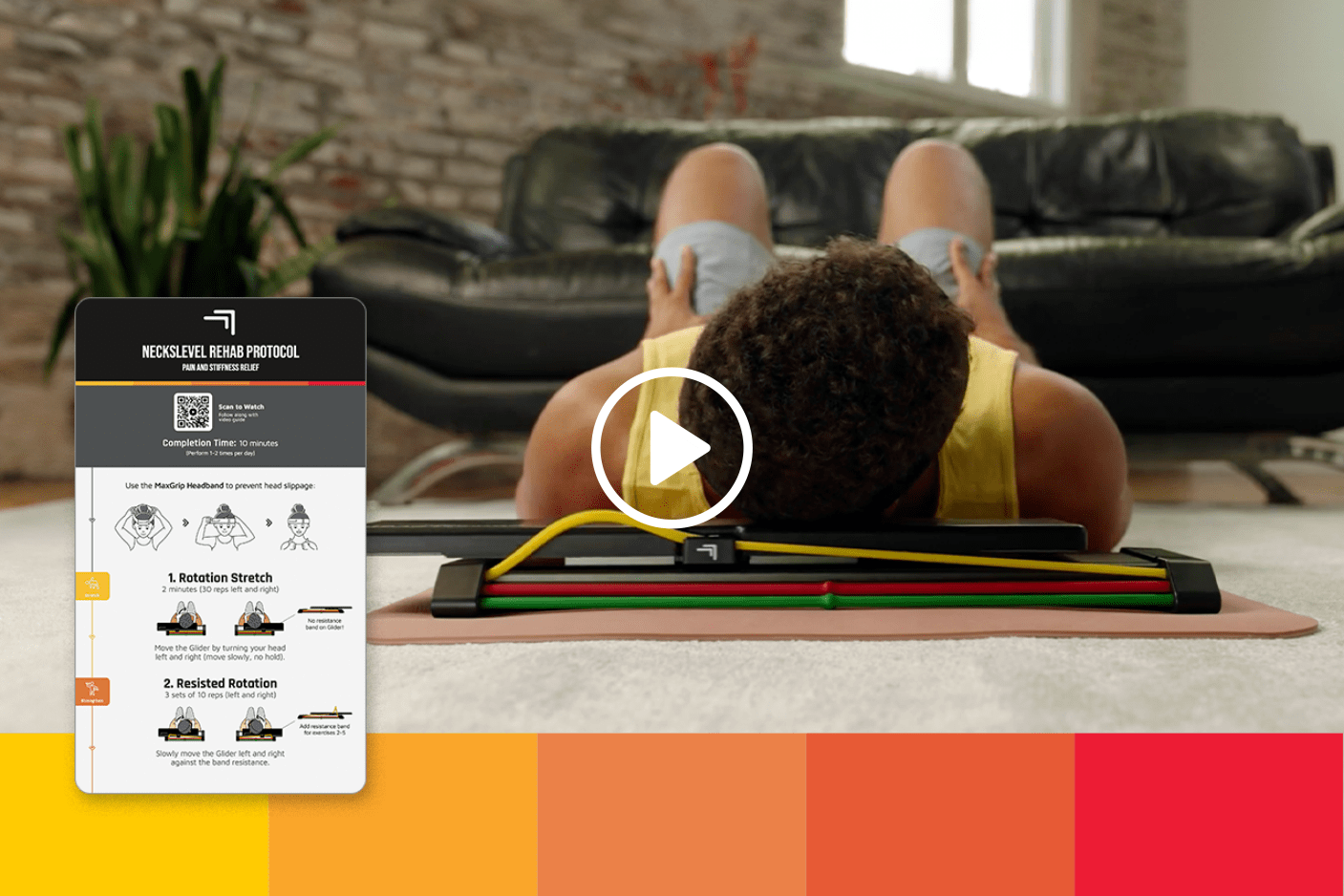
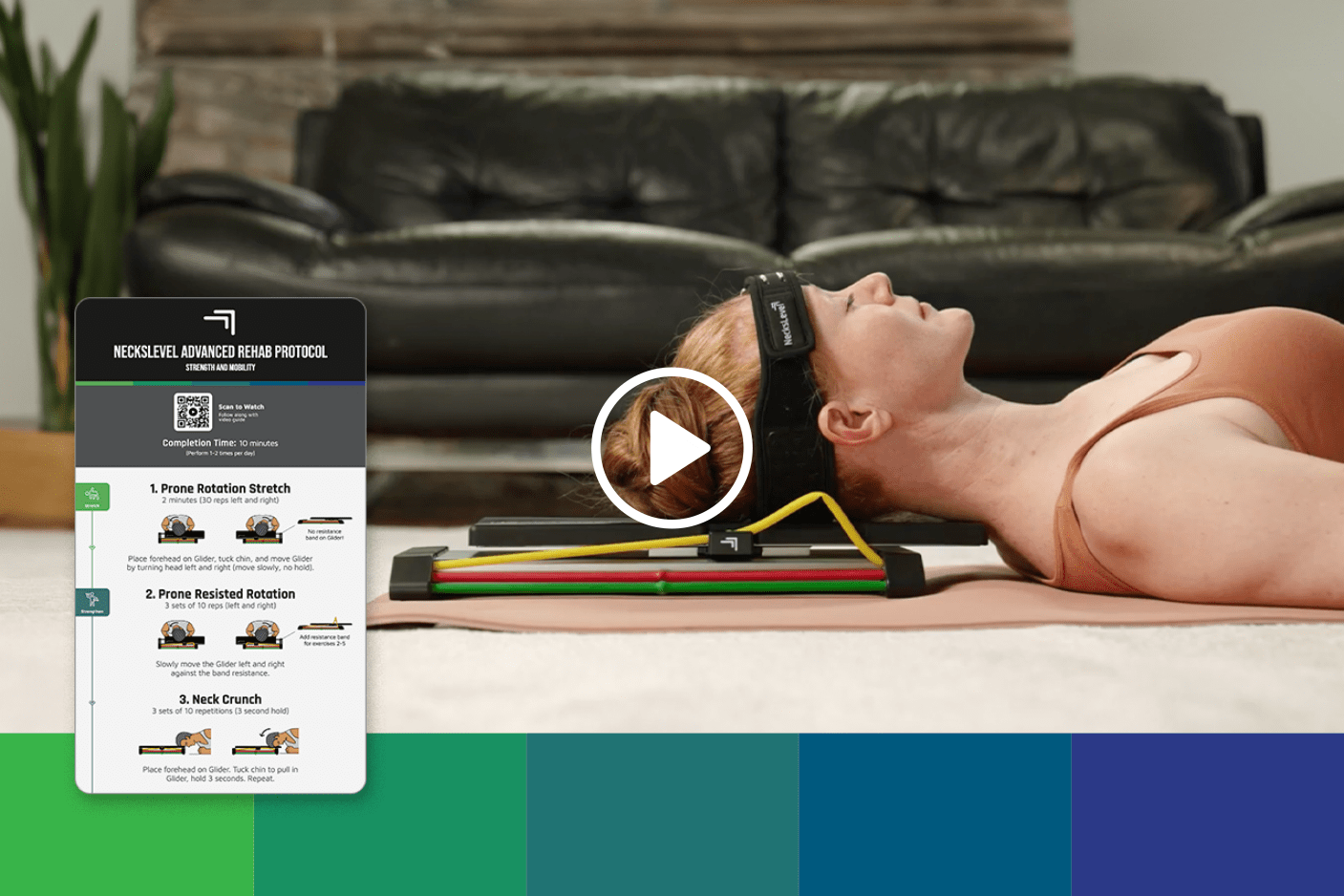
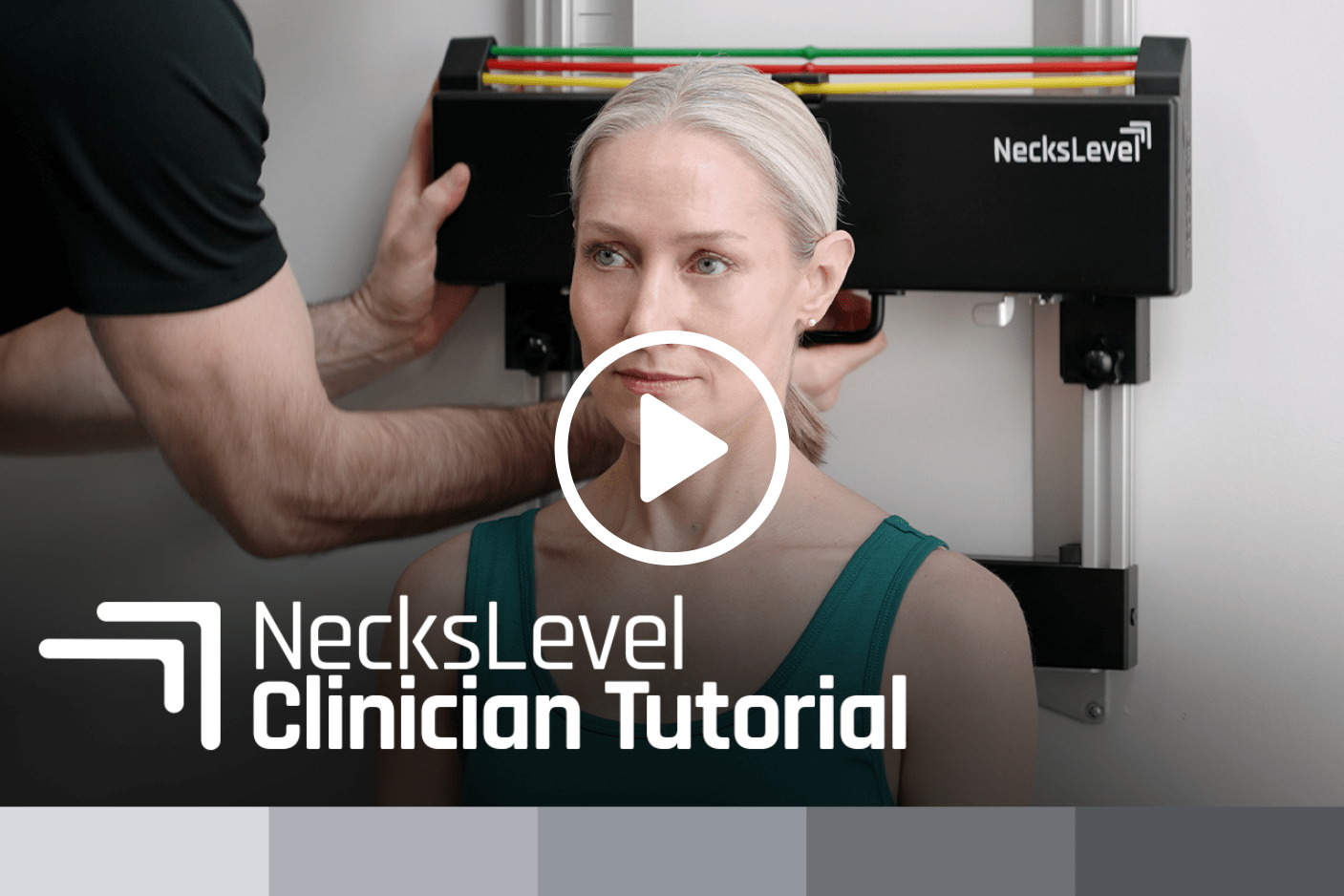

Published Oct 20, 2026
At Home Neck Rehab After Cervical Fusion Surgery

Recovering from cervical fusion surgery takes time, patience, and the right rehabilitation approach. Although surgery may help relieve nerve compression and neck pain, rebuilding strength, restoring comfortable movement, and improving posture are important parts of the recovery process.
An at-home cervical fusion rehab program can help patients gradually return to everyday activities through gentle movement, shoulder strengthening, and eventually more targeted neck exercises.
However, not every exercise is appropriate immediately after surgery. Your recovery program should follow your surgeon's instructions and account for the type of fusion performed, the number of spinal levels involved, and how your body is healing.
This guide covers common physical therapy exercises after cervical fusion, how rehabilitation typically progresses, and where tools like the NecksLevel Glide may fit into a later-stage home exercise routine.
Important Disclaimer
This article is educational and does not replace your surgeon's postoperative instructions. Begin or advance neck-specific exercises only after receiving clearance from your surgeon or physical therapist. The example repetitions below are not a personalized postoperative prescription.
Cervical Fusion Recovery Time: What to Expect After Surgery
Cervical fusion surgery joins two or more vertebrae in the neck to stabilize the spine. It is commonly performed to treat conditions such as herniated discs, cervical radiculopathy, spinal stenosis, and spinal cord compression.
The recovery process generally involves protecting the surgical area, allowing bone healing to progress, and gradually rebuilding the muscles that support the cervical spine.
ACDF Surgery Recovery and When Physical Therapy Begins
Anterior cervical discectomy and fusion (ACDF) is a common cervical fusion procedure in which a surgeon accesses the spine through the front of the neck, removes a damaged disc, and stabilizes the affected vertebrae.
During the initial recovery period, patients may experience neck stiffness, muscle soreness, fatigue, and temporary difficulty swallowing.
Some patients begin gentle activities such as walking shortly after surgery, while more structured cervical spine rehabilitation may begin several weeks later.
Depending on the surgical procedure and surgeon's recommendations, formal physical therapy may begin around four to twelve weeks after surgery. Some patients require a longer period of protection before starting cervical range-of-motion or strengthening exercises.
Cervical Fusion Physical Therapy Protocol: Understanding the Stages of Recovery
A cervical fusion physical therapy protocol usually progresses from basic activity and posture management to controlled movement and eventually strengthening.
The exact timing varies between surgical teams. Some postoperative protocols limit neck rotation for several weeks, while others allow carefully controlled movement sooner.
Early Cervical Fusion Recovery: Walking, Posture, and Gentle Movement
During the early recovery period, the priority is protecting the surgical area while maintaining safe levels of activity.
Surgeon-approved activities may include short walks, diaphragmatic breathing, gentle shoulder movements, and posture awareness.
Patients should follow their instructions regarding cervical collars, lifting restrictions, sleeping positions, and permitted neck movement.
At this stage, avoid introducing neck resistance exercises, traction, or stretching devices independently.
Cervical Fusion Rehab: Restoring Neck Mobility After Clearance
Once the surgeon permits cervical movement, rehabilitation may include gentle active range-of-motion exercises.
These exercises focus on moving the neck within an approved range without forcing a stretch.
The goal is to gradually restore functional movement while avoiding unnecessary strain on the healing fusion.
Later-Stage Cervical Fusion Rehabilitation: Rebuilding Neck Strength
After the surgical team clears the patient for strengthening, physical therapy may focus more heavily on cervical stabilization, muscular endurance, and shoulder-blade strength.
Controlled chin tucks, cervical isometric holds, and progressively resisted movements may become appropriate.
This is also the stage when patients can discuss whether a supported exercise device, such as the NecksLevel Glide, may be appropriate for their individual rehabilitation program.
Physical Therapy After Cervical Fusion with At-Home Rehab Exercises
The following exercises are commonly used in neck rehabilitation or postoperative physical therapy. They are organized by the type of clearance generally needed.
Not every exercise will be appropriate for every patient, and the suggested repetitions should be adjusted by your treating clinician.
Walking After Neck Surgery to Restore Activity and Endurance
Appropriate stage:Early recovery, when cleared to walk.
Walking is one of the most accessible exercises following cervical fusion surgery.
Regular, comfortable walking helps patients maintain general fitness and gradually rebuild activity tolerance without requiring direct resistance training for the neck.
How to perform:
- Begin with a short walk on a flat, stable surface.
- Maintain a comfortable, upright posture.
- Keep your head and shoulders relaxed.
- Walk at a pace that does not increase symptoms.
- Gradually increase walking duration according to your surgeon's recommendations.
Some patients begin with several short walks of approximately five minutes throughout the day.
Avoid uneven terrain, situations with a high risk of falling, or strenuous walking until permitted.
Diaphragmatic Breathing During Cervical Fusion Recovery
Appropriate stage:Early recovery, when approved.
Diaphragmatic breathing encourages relaxed breathing without unnecessarily tensing the neck and shoulder muscles.

How to perform:
- Sit comfortably or lie on your back with your head and neck supported.
- Place one hand gently on your upper chest and the other on your abdomen.
- Breathe slowly through your nose, allowing your abdomen to rise.
- Exhale comfortably without holding your breath.
- Repeat for five to ten relaxed breaths.
Keep your neck neutral and avoid straining the incision area.
This is a low-intensity exercise that can be incorporated into a surgeon-approved recovery routine.
Scapular Retractions for Shoulder and Neck Pain After ACDF Surgery
Appropriate stage:Early or intermediate recovery, when shoulder exercises are cleared.
The shoulder blades play an important role in upper-body posture. Strong shoulder blade muscles, including the trapezius and rhomboids, help stabilize the upper back and support comfortable head and neck positioning.

Following cervical fusion, gently activating these muscles may be part of an individualized rehabilitation program.
How to perform:
- Sit upright with both feet resting on the floor.
- Keep your neck in a comfortable, neutral position.
- Gently draw your shoulder blades toward one another.
- Hold for approximately two to three seconds.
- Relax and repeat.
Your physical therapist may initially recommend five to ten controlled repetitions.
Avoid shrugging your shoulders excessively or arching your neck backward.
Backward Shoulder Rolls for Trapezius Pain After Cervical Fusion
Appropriate stage:Early or intermediate recovery, when approved.
Some patients experience discomfort around the trapezius muscles and upper shoulders following cervical fusion.
Gentle shoulder rolls may help improve movement in the surrounding muscles and address neck and shoulder stiffness without requiring deliberate cervical rotation.
How to perform:
- Sit comfortably with your arms relaxed.
- Slowly bring your shoulders slightly upward.
- Roll your shoulders backward in a small, comfortable circle.
- Allow your shoulders to return to their starting position.
- Repeat five to ten times if approved.
Keep your head still and avoid large or forceful movements.
Although shoulder discomfort can occur during recovery, worsening or unusual pain should be discussed with your surgeon.
Gentle Chin Tucks for Cervical Fusion Rehabilitation
Appropriate stage:Only after your surgeon or physical therapist specifically permits cervical retraction or deep neck flexor exercises.
Chin tucks are commonly used in cervical rehabilitation to activate the deep neck flexor muscles, which play an important role in cervical stability and controlled head positioning.
Once medically cleared, gentle chin tucks may help patients gradually restore muscular control following surgery.
The goal is not to force the chin toward the chest. Instead, the movement should be subtle and controlled.

How to perform:
- Lie on your back with your head comfortably supported.
- Relax your shoulders and jaw.
- Gently nod your head as though making a very small "yes" movement.
- Keep your head resting on the supporting surface.
- Hold briefly, then relax.
If your therapist approves, an introductory routine might involve five repetitions with a two- to three-second hold.
Avoid lifting your head or forcing the movement.
Postoperative consideration
Some cervical fusion protocols delay chin tucks or cervical retraction until later recovery. Do not assume this exercise is appropriate simply because it is commonly used for general neck pain.
Pain-Free Cervical Rotation Exercises After Neck Fusion Surgery
Appropriate stage:After explicit clearance for active cervical rotation.
Restoring comfortable movement is an important part of cervical rehabilitation. Gentle, controlled rotation is one of several approaches used in neck pain relief exercises to address stiffness and maintain mobility.

Following cervical fusion, however, rotation should only be introduced after surgical clearance and should remain within the recommended range of motion.
How to perform:
- Sit upright or lie on your back with appropriate support.
- Keep your shoulders relaxed.
- Slowly turn your head a small distance to one side.
- Return to the center.
- Repeat toward the opposite side.
If approved, begin with only a few controlled repetitions in each direction.
Avoid pushing into stiffness, using your hands to increase rotation, or attempting to regain your previous range of motion.
The goal is to restore functional movement gradually rather than immediately achieving your pre-surgery range of motion.
Cervical Isometric Exercises for Neck Strength After Fusion
Appropriate stage:Later rehabilitation, only after clearance for cervical strengthening.
Cervical isometric exercises activate neck muscles without producing significant visible movement.
They are frequently used in rehabilitation programs to rebuild cervical muscular control. Unlike dynamic exercises, which require movement through a range of motion, isometric exercises focus on maintaining a steady position against gentle resistance.

How to perform:
- Sit upright with your head in a neutral position.
- Gently place your fingertips against the side of your head near your temple.
- Apply very light pressure while using your neck muscles to maintain the same head position.
- Hold for approximately three seconds without turning your head.
- Relax completely before repeating.
If prescribed, your therapist may begin with a few gentle holds on each side.
The pressure should be minimal and should not cause pain, headaches, or radiating symptoms.
As recovery progresses, your physical therapist may introduce additional neck strengthening exercises that target the deep cervical stabilizers and surrounding muscles.
Postoperative consideration
Resisted neck exercise should not begin until your surgeon approves it. Some postoperative fusion protocols delay cervical isometrics until approximately twelve weeks or later.
Light Resistance Band Rows for Cervical Fusion Physical Therapy
Appropriate stage:Later rehabilitation, after clearance for upper-body resistance training.
Strengthening the shoulder blade muscles can complement cervical stabilization exercises by improving shoulder control and postural endurance.
Light resistance band rows are one option commonly used in physical therapy.
How to perform:
- Secure a light resistance band at approximately chest height.
- Stand or sit upright with your neck in a neutral position.
- Hold the band with your elbows comfortably near your sides.
- Gently pull your elbows backward while drawing your shoulder blades together.
- Slowly return to the starting position.
A physical therapist may prescribe a small set of controlled repetitions before progressing resistance.
Avoid leaning backward, shrugging your shoulders, or using a band that requires significant effort.
How the NecksLevel Glide May Support Later-Stage Cervical Fusion Rehab
As patients progress through rehabilitation, controlled neck strengthening and mobility exercises may become part of their recovery program.
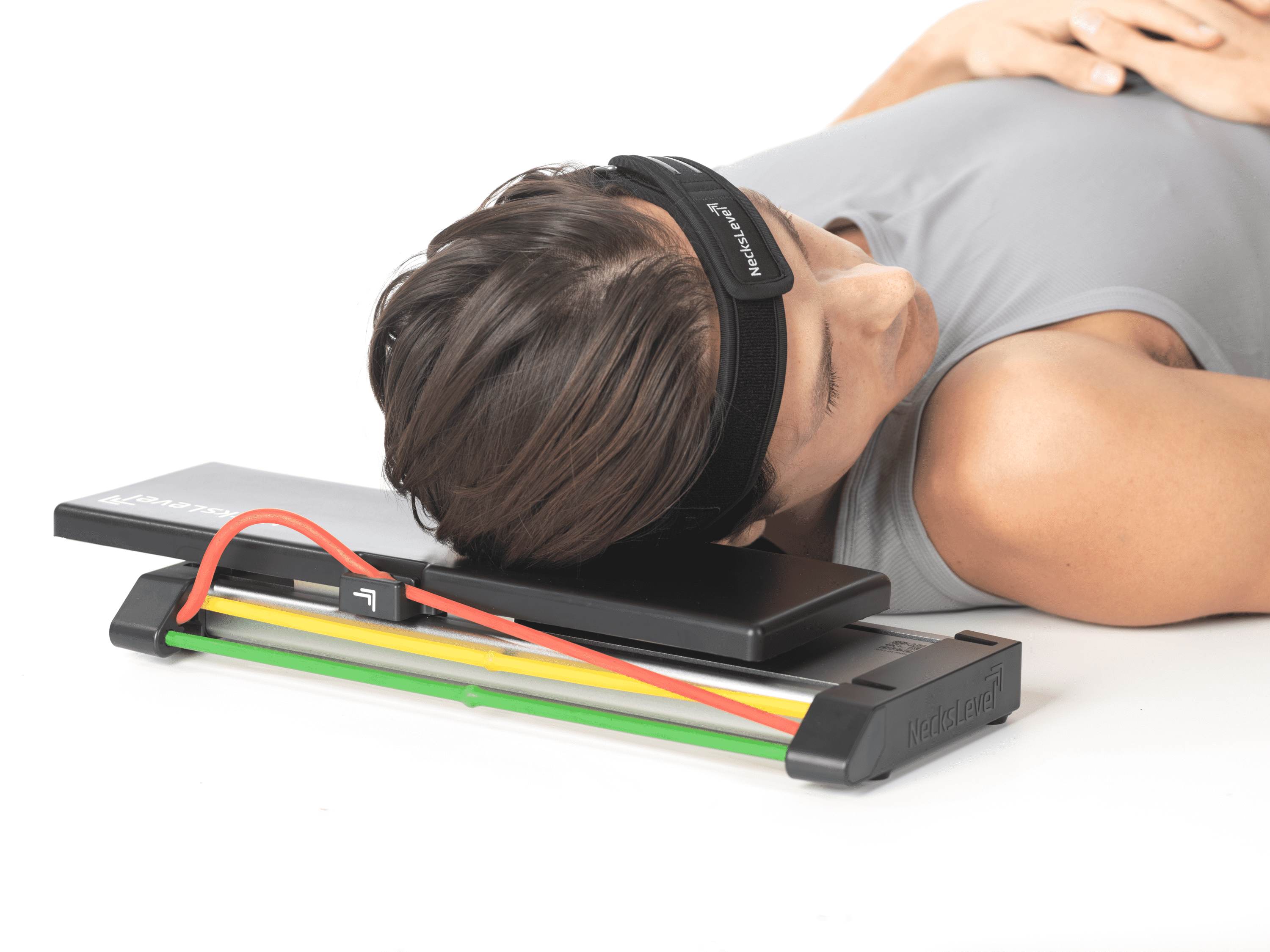
The NecksLevel Glide provides a supported platform for performing selected cervical movements while lying down, with adjustable resistance options for progressive exercise.
Unlike conventional exercises that require patients to hold their head unsupported, the NecksLevel Glide allows exercises to be performed while lying down with the head resting on the device.
For patients who have received medical clearance, this supported approach may offer a convenient way to incorporate prescribed neck exercises into an at-home rehabilitation routine.
However, the NecksLevel Glide is not a substitute for a postoperative fusion protocol, and its use after cervical fusion should be specifically approved by the treating surgeon or physical therapist.
Supported Neck Rotation with the NecksLevel Glide
For patients who have been cleared for cervical rotation and device-assisted exercise, a physical therapist may consider gentle rotation on the NecksLevel Glide without resistance.
Rotation stretch
Supported rotation on the NecksLevel Glide with no resistance attached. The head rests on the platform and turns side to side within a small, comfortable range.
The device supports the head as the user performs controlled side-to-side movement.
The emphasis should remain on a small, comfortable range of motion rather than increasing flexibility or stretching the neck.
The NecksLevel Glide's supported design allows patients to perform selected neck movements while lying down, which may be appropriate for certain rehabilitation programs once the fusion has sufficiently healed.
Progressive Cervical Strengthening with the NecksLevel Glide
In later rehabilitation, patients who have received explicit clearance for resisted cervical exercise may discuss the NecksLevel Glide's adjustable resistance options with their physical therapist.
The device supports exercises such as chin tucks, isometric holds, and controlled resisted rotation.
Chin tucks
A chin tuck on the NecksLevel Glide. The head stays on the platform and the movement is a small nod, not a lift.
Isometric holds
An isometric hold on the NecksLevel Glide. The head is held steady against a light load rather than moved through a range.
Resisted rotation
Resisted rotation on the NecksLevel Glide. The head turns side to side against the resistance band while the platform carries its weight.
These movements target muscles involved in cervical stability, muscular endurance, and head positioning.
The appropriate movement, resistance level, and training frequency should be determined by the clinician supervising recovery.
Important
Do not use the NecksLevel Glide for cervical traction or aggressive stretching after fusion surgery. Cervical traction is generally discouraged after fusion, and the Neckslevel Glide's general stretching recommendations should not be treated as postoperative instructions.
Cervical Fusion Exercises to Avoid During Recovery
Understanding which cervical fusion exercises to avoid is just as important as knowing which exercises may eventually help.
During the healing process, certain movements can place unnecessary strain on the neck or conflict with surgical precautions.
Depending on your surgeon's instructions, exercises and activities to avoid may include:
- Forceful neck stretching: Pulling the head into rotation, flexion, or side bending can place unnecessary stress on healing tissues.
- Cervical traction: At-home traction devices should not be used after fusion without specialist evaluation and explicit direction.
- Heavy resisted neck exercises: Strong resistance bands, weighted head movements, and other loaded exercises should not begin before medical clearance.
- Chin tucks with head lifts: These place greater demands on the cervical muscles than supported chin tucks and may not be appropriate during early recovery.
- Neck bridges or aggressive strengthening: Exercises that place substantial force through the head and cervical spine should be avoided during postoperative rehabilitation.
- Unapproved heavy lifting or overhead resistance: Follow the lifting and activity restrictions established by your surgeon.
Exercises should not cause increasing neck pain, new tingling, numbness, weakness, or radiating arm symptoms.
Contact your surgical team for new or worsening neurological symptoms, concerning incision changes, fever, or increasing swallowing difficulty. Difficulty breathing or rapidly worsening neck swelling requires emergency medical attention.
How to Sleep After Neck Surgery and Support Cervical Fusion Recovery
Sleeping comfortably after neck surgery can be challenging, especially during the first several weeks.
Maintaining proper alignment during sleep can help patients avoid unnecessary strain on the neck during recovery.
Choosing supportive pillows and comfortable sleeping positions for neck pain relief may help maintain a neutral cervical position while resting.
For back sleeping, the pillow should support your head without forcing your chin sharply toward your chest.

For side sleeping, the pillow should fill the space between your shoulder and head so the neck does not sag excessively.

If you have been prescribed a cervical collar, follow your surgeon's instructions regarding when it must be worn, including during sleep.
Building a Consistent At-Home Cervical Fusion Rehab Routine
Successful rehabilitation after cervical fusion is not about performing the most difficult exercises or progressing as quickly as possible.
It is about gradually restoring function while allowing the surgical area to heal.
A well-designed home exercise program may eventually include walking, shoulder mobility, postural exercises, controlled cervical movement, and progressive strengthening.
As patients move into later stages of recovery, targeted neck exercises may become an important part of maintaining muscular endurance and comfortable movement.
For individuals who have been medically cleared for device-assisted cervical rehabilitation, the NecksLevel Glide offers a supported way to perform selected neck movements and strengthening exercises at home.
Its adjustable resistance and gliding platform make it an option to discuss with your physical therapist when transitioning from supervised rehabilitation to a more independent exercise routine.
Consistency, controlled movement, and the right exercise progression are essential to long-term recovery. By following a personalized rehabilitation program, patients can work toward improving neck function, building muscular strength, and returning to daily activities with greater confidence.
Frequently Asked Questions About Cervical Fusion Recovery and Rehabilitation
When Can I Start Physical Therapy After ACDF Surgery?
The timeline varies depending on the procedure, the number of levels fused, and your surgeon's postoperative protocol.
Gentle walking is often encouraged early, while structured neck rehabilitation may begin several weeks later. Some patients start formal physical therapy around four to six weeks, while others wait eight to twelve weeks or longer.
Always follow your surgeon's instructions before beginning neck exercises.
Are Chin Tucks Safe After Cervical Fusion?
Chin tucks may be included in cervical fusion rehabilitation once they are approved by the treating surgeon or physical therapist.
The movement should be gentle and controlled, without lifting the head or forcing the neck forward.
Some postoperative protocols delay cervical retraction exercises, so chin tucks should not automatically be started immediately after surgery.
Can I Do Cervical Fusion Exercises with Resistance Bands?
Resistance bands may be introduced during later-stage cervical fusion rehabilitation.
Light shoulder blade exercises are often introduced before more demanding resistance exercises for the neck itself.
The appropriate resistance, exercise selection, and timing should be determined by your physical therapist.
Can I Use the NecksLevel Glide After Cervical Fusion Surgery?
The NecksLevel Glide may be considered for selected supported neck exercises during later rehabilitation if your surgeon and physical therapist specifically approve its use.
It should not be used as an unsupervised immediate postoperative rehabilitation device, and cervical traction or aggressive stretching should be avoided following fusion unless specifically directed by a treating specialist.
Your rehabilitation team can help determine whether controlled motion or strengthening exercises using the device are appropriate for your recovery.

Scott is an Orthopedic Physical Therapist specializing in neck pain with nearly a decade of clinical experience. He regularly speaks at national Physical Therapy, Athletic Training, & Chiropractic conferences on neck injuries & rehab in sport.
NecksLevel Glide
"Like having a Physical Therapist in your home"
Professional neck strengthening and stretching in one compact device. Relieve neck pain while reducing neck stiffness & improving your posture.
Shop Now

